When payroll and workforce management meet extreme frontline complexity
When pay and WFM are pushed to the limit, what happens underneath?


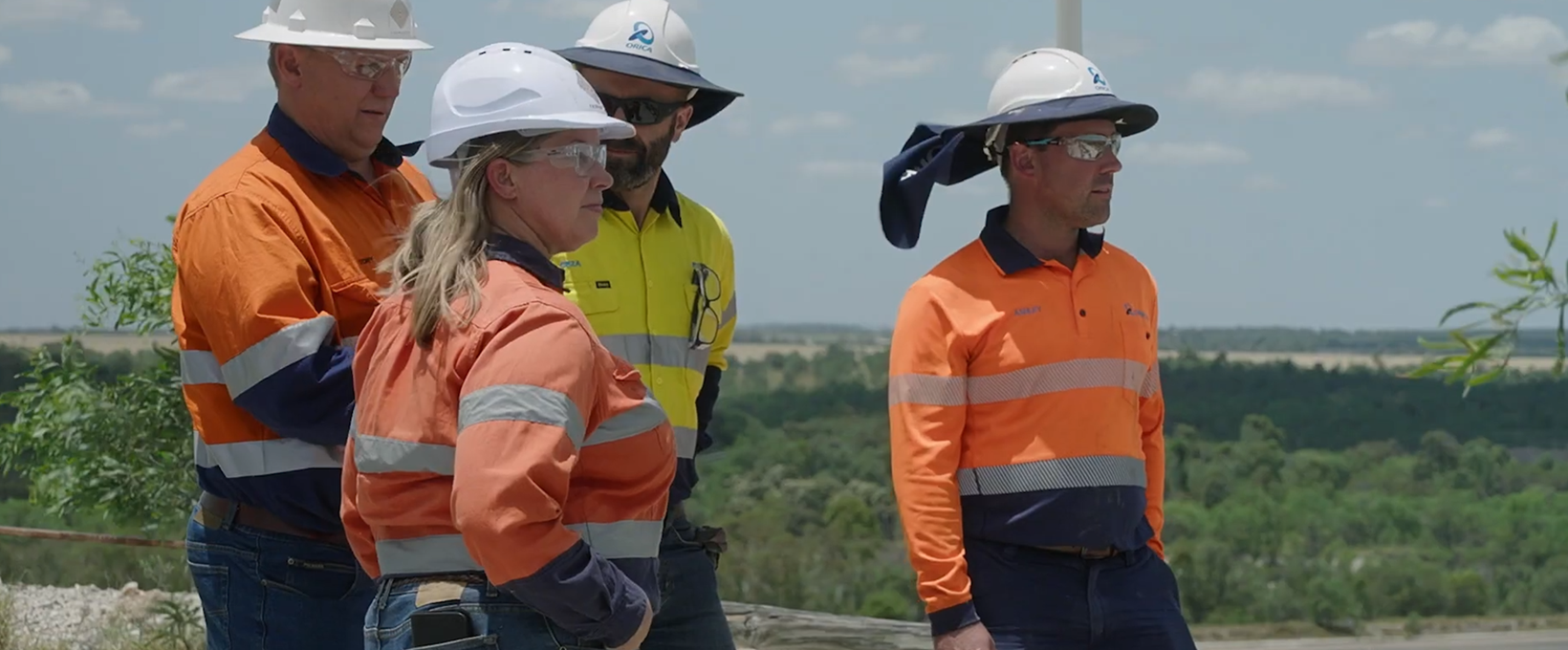
Table of Contents
Table of Contents
A seafood processing vessel moves between U.S. tax jurisdictions while its crew is working.
A round-the-clock airline supports nearly 5K employees and 750 flights every day.
A commercial explosives company employs people across 48 countries.
These sound like extraordinary cases. For the organizations managing them, they’re just another Tuesday. And underneath that complexity is a constant stream of everyday workforce events with consequences for pay, labor costs, and compliance.
A schedule changes. Someone works overtime. An employee clocks in at a different location. A shift triggers a premium. An absence changes the hours worked. Many of these events are captured in workforce management (WFM), but their impact also needs to be reflected in payroll.
Most HCM evaluations stop at asking whether payroll and WFM are integrated. The next question is often, "How fast do they synchronize?"
But for organizations managing complex workforces, the more revealing question is:
How many handoffs happen inside your HCM stack between a workforce event and its payroll impact?
A “unified” suite isn’t necessarily a single architecture
For years, large organizations have been consolidating HR technology onto enterprise HCM suites. There are good reasons for that. Fewer vendors and applications can simplify administration, procurement, support, and the employee experience.
But consolidation alone doesn’t answer what happens underneath that experience.
Vendors may describe payroll and WFM as “integrated” or “unified.” Some may even point to a common data model across their suite. But those terms don't answer a more fundamental question: when something changes in the workforce, how does that change actually make its way into payroll?
If that change has to move between systems, processing environments, or data states, there’s still a handoff to manage. Making that handoff faster can reduce the delay, but it doesn’t eliminate the dependency.
That’s why the more revealing measure isn’t how quickly payroll and WFM synchronize. It’s whether they have to synchronize at all.
Think about two clocks in the same kitchen: one on the microwave and one on the oven. You can set them to the same time. You can resynchronize them whenever they drift. But they remain two independently maintained clocks.
The same question applies to HCM architecture: Do payroll and WFM operate from the same continuously maintained workforce data, or do independently maintained states have to be synchronized?
That might sound a bit technical at first, but the impact of that distinction becomes a lot easier to see when your workforce gets complicated.
When the workplace itself moves
Consider Trident Seafoods.
Its workforce includes thousands of year-round and seasonal employees working as captains, engineers, seafood processors, mechanics, dock workers, and office staff. Their compensation can include annual salaries, daily rates, hourly pay, and production-based arrangements.
Some of those employees work aboard processing vessels, which means their workplace can literally change tax jurisdictions while they’re working. And location is a workforce fact that can affect payroll requirements.

Trident records vessel locations in the Dayforce platform to help support its management of applicable state tax requirements based on the jurisdiction recorded in the system. According to Trident, the other systems it evaluated at the time of purchase didn't offer that type of tracking.
“We chose Dayforce because it's a single solution in a single system.”
— Katrina Fountain, Director of Total Rewards, Trident Seafoods
This gets to the heart of the architecture question. If WFM knows where someone worked and that location affects payroll, does payroll operate from that same workforce fact? Or does the information first have to move to, and be processed by, another environment?
Synchronization can make that second model faster. But a single architecture can reduce the need for that handoff between native payroll and WFM systems in the first place.
When pay and time have to keep pace with 750 flights a day
Endeavor Air presents another kind of extreme workforce complexity.
The regional airline supports nearly 5K employees and around 750 flights every day. Its operation runs 24/7, roughly 40% of its workforce is unionized, crews are highly mobile, and the airline has to navigate extensive legal requirements alongside a patchwork of state tax laws.

For pilots and flight attendants, pay is especially complex. Crew members may be subject to tax treatment based on where they live, while certain unemployment requirements may be associated with their assigned base, which can be in a different state. Union agreements and role-specific rules add another layer.
Before Dayforce, Endeavor relied on six disconnected systems to manage HR, payroll, time, benefits, and talent. Data was spread across platforms, processes were largely manual, and HR teams spent significant time reconciling information. That can be especially challenging in an operation where payroll and time are connected to scheduling, safety-related processes, compliance requirements, and around-the-clock operations.
A general-ledger payroll reporting process that once took roughly a day and a half now takes about five minutes.
Endeavor moved HR, payroll, time, benefits, talent, and analytics onto the Dayforce platform. Employees now record actual time worked using Dayforce time clocks at key locations, rather than relying on estimated scheduled start times. Pay, time, and analytics operate together on the same platform.
The impact is tangible. Endeavor has also been able to move two HR administrator roles away from manual data-entry work and toward more strategic responsibilities.
And the same single-architecture approach can help support customers in managing complex crew-pay requirements. Endeavor reports that Dayforce technology helped support its crew-member taxation requirements in a way the other systems it evaluated didn't.
The architectural test here is simple: When actual time changes in a workforce operating around the clock, how many system boundaries or data transfers stand between that event and its payroll impact?
When payroll complexity spans 48 countries
Then there's Orica.
The mining and infrastructure solutions company has more than 14K employees operating across 48 countries and five geographies. Its workforce includes salaried and non-salaried employees, unionized and non-unionized workers, representing roughly 90 cultural backgrounds.

At one point, Orica was managing that complexity through 34 separate payroll systems.
Payroll in an environment like that involves a lot more than calculating earnings. Different workforce populations, local requirements, time and attendance, allowances, compliance requirements, and regional processes can all factor into payroll processes.
Orica began consolidating those payroll environments onto the Dayforce platform alongside Time & Attendance, with the aim of standardizing payroll operations and helping improve its ability to manage compliance requirements across regions.
“What we’re really looking to do is know that we’re accurately paying our people – every time we pay them.”
— Stacey Brewer, Vice President, Global Process Strategy and Enablement, Orica
Orica reports that consolidating payroll onto the Dayforce platform has helped standardize payroll operations across regions, reduce the burden of fragmented processes, and give its team more capacity to focus on reporting, anomaly detection, governance, and compliance.
Orica’s story shows why consolidation matters. It also shows why the architecture you consolidate onto matters more. At Orica’s scale, consolidating onto a single architecture can reduce the number of places where workforce and payroll information need to be kept aligned.
Extraordinary cases expose an everyday problem
Most employees will never process seafood in the Bering Sea. Most organizations aren’t supporting hundreds of flights a day or running payroll across dozens of countries.
But the underlying challenge isn’t unusual. As workforce complexity grows, so do the opportunities for what happens at work and what payroll reflects to fall out of step.
So the next time you evaluate payroll and WFM, don't stop at whether they're integrated. Ask what the architecture actually requires when something changes.
5 HCM architecture questions to ask any payroll and WFM vendor
- When you say payroll and WFM share one data model, what does that mean for how the two actually process a workforce change?
- When time, schedules, location, premiums, or absences change, what has to happen inside the system before payroll can reflect that change?
- Does anything have to be transferred, synchronized, or reconciled between your native payroll and WFM systems?
- If payroll and WFM maintain information separately, what keeps them aligned when something changes?
- Can payroll continuously calculate audit-ready net pay using current workforce data throughout the pay cycle, or does calculation depend on another system handoff or process?
And if the answer involves synchronization, ask one more question:
Why does the data need to be synchronized in the first place?
A fast handoff can reduce latency. It doesn’t eliminate the handoff.
The next time an HCM vendor describes payroll and WFM as “unified,” ask whether the architecture underneath is actually single. For organizations managing complex workforces, that distinction matters more than the label.
Want to see what a single payroll and WFM architecture looks like in practice?
Let’s see it
References
1. Dayforce, “Orica sets off global payroll transformation,” Dayforce customer story.
2. Dayforce, “Endeavor Air builds a stronger runway for change,” Dayforce customer story.
3. Dayforce, “Trident Seafoods reels in a seasonal workforce,” Dayforce customer story.
You may also like:
Ready to get started?