HCM compliance: How to evaluate risk and controls
Getting HCM compliance right matters beyond avoiding penalties. Your payroll accuracy and workforce data security depend on it. Here’s what to look for in an HCM platform and how to pressure-test vendors before you sign anything.


Table of Contents
Compliance questions rarely stop at HR. They tend to find their way to the people responsible for the company’s finances and reputation, too.
That’s why CFOs, directors, HR leaders, and IT teams often all play a role in evaluating whether an HCM platform can effectively support audit readiness and keep workforce data secure. And as organizations grow into new regions or add new worker types, the requirements only get more involved.
Here’s what buying committees should evaluate when reviewing HCM platforms for compliance-heavy industries. We also cover how the right HCM software can help organizations manage compliance as they grow.
That’s a lot for HR, payroll, and frontline managers to handle. Fortunately, modern HCM platforms help manage that load through built-in controls and oversight.
HCM security features, for example, can help organizations protect employee data and manage system access while maintaining records that support potential audits. When those safeguards come standard in the system, managing compliance can be part of normal operations rather than a separate effort.
Considered together, the following compliance-focused features in HCM software can help organizations document policy enforcement and maintain audit-ready records.
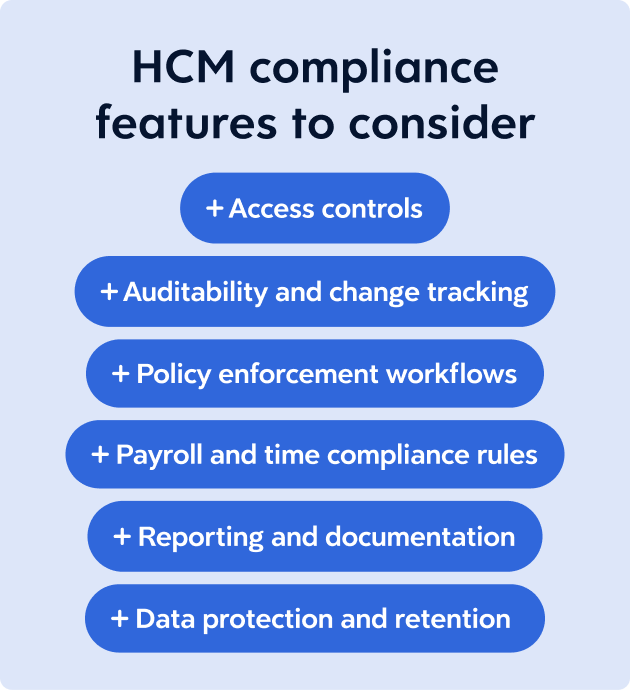
Role-based access controls limit visibility based on job responsibilities, and administrative permissions help prevent unauthorized changes to payroll and employee records. Organizations also often rely on approval layers that separate those who enter data from those who authorize it.
That kind of visibility helps confirm that changes affecting pay or employee records follow the right process.
This visibility, supported by automated alerts, can help teams identify issues early rather than correcting them after payroll and reporting processes close.
Configurable pay rules help organizations account for overtime regulations, predictive scheduling regulations, and union collective bargaining agreements (CBAs), just to name a few. Systems that flag exceptions early in the process make it possible for payroll teams to better address issues before they affect the payroll process and reporting outcomes.
Strong reporting tools also help HR and finance prepare records when regulators request specific documentation.
Defined data retention policies also factor in here, helping organizations manage workforce and payroll data responsibly while responding to privacy expectations across different jurisdictions.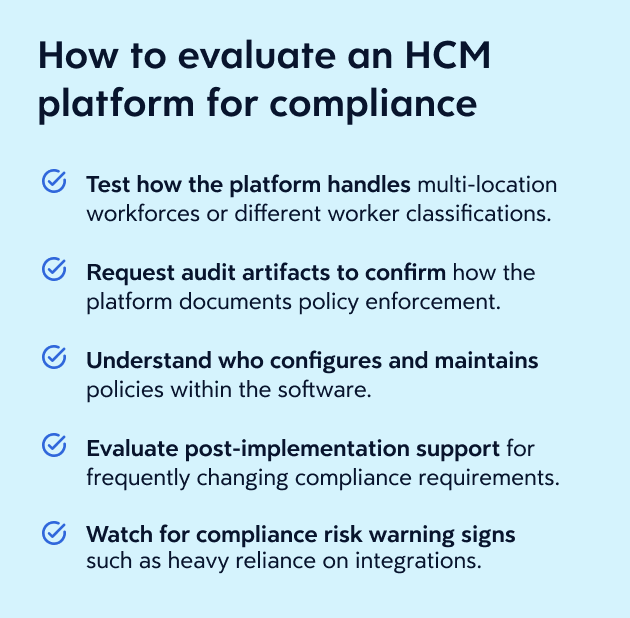
A standard product demo won’t always tell you everything about how the compliance capabilities of an HCM platform hold up under real conditions. The best approach is to put it through conditions your workforce actually deals with.
Here’s what that looks like in practice:
Identify who “owns” workforce data and who has the authority to configure system rules. Getting these responsibilities set up early helps define HCM security expectations and maintain accountability as your system evolves.
Clear workforce data governance means documenting how payroll, scheduling, and time rules get updated and how system access is managed. Consistent processes for handling policy changes help keep records accurate while reducing the risk of things slipping through as the organization grows.
Ongoing monitoring is what keeps governance practices from going stale. Regulatory requirements change, and so do workforces.
An HCM platform designed with clear governance and auditability can help teams more confidently manage workforce obligations. For a deeper look at evaluation steps and selection strategies, explore our complete HCM software buyer’s guide.
That’s why CFOs, directors, HR leaders, and IT teams often all play a role in evaluating whether an HCM platform can effectively support audit readiness and keep workforce data secure. And as organizations grow into new regions or add new worker types, the requirements only get more involved.
Here’s what buying committees should evaluate when reviewing HCM platforms for compliance-heavy industries. We also cover how the right HCM software can help organizations manage compliance as they grow.
Key takeaways
- When evaluating HCM solutions with compliance features, leaders should focus on how policies are enforced and how system activity is documented.
- Effective platforms help support compliance through clear governance controls, flexible configurations to help manage changing policies and requirements, and reliable audit records.
- Having a single system for workforce management and pay enables consistent application of your compliance rules when compared to bolted together solutions.
- Buying committees should test compliance capabilities under real conditions, including across locations and different worker classifications.
- Clear data governance during implementation helps keep compliance controls consistent as an organization grows.
What is HCM compliance?
HCM compliance means meeting the legal and regulatory requirements tied to managing your workforce. Wage and hour rules, payroll tax reporting, employee classifications, and the protection of sensitive workforce data can all fall under this umbrella. On top of national requirements, many organizations also face regional and industry-specific rules that can touch nearly every part of workforce management.That’s a lot for HR, payroll, and frontline managers to handle. Fortunately, modern HCM platforms help manage that load through built-in controls and oversight.
HCM security features, for example, can help organizations protect employee data and manage system access while maintaining records that support potential audits. When those safeguards come standard in the system, managing compliance can be part of normal operations rather than a separate effort.
HCM compliance features to consider
When you evaluate an HCM platform, its ability to support compliance standards depends on controls built throughout the system. It’s less about a single feature and more about how well the platform adapts to changing workforce policies and regulatory requirements.Considered together, the following compliance-focused features in HCM software can help organizations document policy enforcement and maintain audit-ready records.
Access controls and separation of duties
A strong compliance foundation starts with setting clear boundaries around who can access or modify workforce data.Role-based access controls limit visibility based on job responsibilities, and administrative permissions help prevent unauthorized changes to payroll and employee records. Organizations also often rely on approval layers that separate those who enter data from those who authorize it.
Auditability and change tracking
Payroll regulations frequently change across federal, state, and local jurisdictions. Compliance also involves showing how workforce data changes over time. Platforms with strong auditability make it easy to trace who made specific changes, when they occurred, and what information was updated.That kind of visibility helps confirm that changes affecting pay or employee records follow the right process.
Policy enforcement workflows
Policies are easier to follow and maintain when they’re embedded directly into workflows. Some HCM platforms build this into their solutions by allowing organizations to configure approvals and flag exceptions that require a manager’s review.This visibility, supported by automated alerts, can help teams identify issues early rather than correcting them after payroll and reporting processes close.
Payroll and time compliance rules
The most visible compliance requirements often involve payroll and timekeeping rules.Configurable pay rules help organizations account for overtime regulations, predictive scheduling regulations, and union collective bargaining agreements (CBAs), just to name a few. Systems that flag exceptions early in the process make it possible for payroll teams to better address issues before they affect the payroll process and reporting outcomes.
Reporting and compliance documentation
Compliance reviews depend on clear and accessible documentation. HCM platforms that provide audit-ready reports make it easier for organizations to show how policies directly impact operations and the workforce.Strong reporting tools also help HR and finance prepare records when regulators request specific documentation.
Data protection and retention
Workforce data includes highly sensitive information, so security and privacy controls are part of the compliance story. Be sure the HCM platforms at the top of your list support this through encryption and controlled system access.Defined data retention policies also factor in here, helping organizations manage workforce and payroll data responsibly while responding to privacy expectations across different jurisdictions.
How to evaluate HCM software based on scalability and compliance
A standard product demo won’t always tell you everything about how the compliance capabilities of an HCM platform hold up under real conditions. The best approach is to put it through conditions your workforce actually deals with.
Here’s what that looks like in practice:
- Test real operational complexity: Ask your top vendors to demonstrate how the system handles multi-location workforces or different worker classifications (e.g., hourly workers). This helps you vet whether the rules can adapt to how your organization operates.
- Request audit artifacts: Ask to see examples of audit logs, change histories, and compliance reports generated by each vendor’s system. How the platform documents policy enforcement over time is more telling than how it looks on a slide.
- Understand who controls system rules: Get specific about how policies are configured and maintained within the HCM software. Determine whether HR, payroll, IT, schedulers, and other administrators can manage rules without tapping external tech support.
- Evaluate post-implementation support: Compliance requirements are always changing. Ask each vendor how it supports updates to payroll rules or regulatory standards for federal, state, and local jurisdictions once the system goes live. Does it automatically push updates, and is there a cost?
- Watch for operational warning signs: Potential signs of future compliance risks include frequent manual reconciliations, heavy reliance on integrations, or controls that can’t adapt across different regions. Maintaining multiple “unified” systems often increases compliance risk.
Establishing data governance during HCM implementation
The best time to define compliance roles and responsibilities is during the implementation of your HCM solution.Identify who “owns” workforce data and who has the authority to configure system rules. Getting these responsibilities set up early helps define HCM security expectations and maintain accountability as your system evolves.
Clear workforce data governance means documenting how payroll, scheduling, and time rules get updated and how system access is managed. Consistent processes for handling policy changes help keep records accurate while reducing the risk of things slipping through as the organization grows.
Ongoing monitoring is what keeps governance practices from going stale. Regulatory requirements change, and so do workforces.
Finding compliance confidence in an HCM suite
Strong HCM, workforce management, and payroll compliance come from controls thoughtfully and deliberately built into the system. When evaluating platforms, leadership committees should look closely at how policies are enforced and how system changes are documented over time.An HCM platform designed with clear governance and auditability can help teams more confidently manage workforce obligations. For a deeper look at evaluation steps and selection strategies, explore our complete HCM software buyer’s guide.
Frequently asked questions
What security controls should HCM software include?
Strong HCM platforms help protect workforce data by using clear access controls and system activity tracking. Leaders should expect role-based permissions and safeguards that help prevent unauthorized record updates. These controls help organizations protect sensitive information and maintain accountability throughout the system.How do you evaluate HCM software for compliance and scalability?
Start by testing how the platform handles real operating conditions. Ask vendors to demonstrate how rules apply across different locations or worker classifications. Also make sure vendors fully explain how policies are maintained and how the system adapts as the organization grows.What audit trails and reporting are needed for HCM compliance?
Compliance largely depends on clear documentation. Look for HCM platforms that record who made a data change and when that change occurred. Reporting tools can help make it more straightforward for teams to review system activity and produce records when auditors or regulators request evidence.What are common HCM software security risks, and how do you manage them?
Many risks can come from overly broad access permissions or poor visibility on certain system changes. Organizations can help address these issues by limiting administrative privileges and reviewing activity logs on a regular basis. Establishing and enforcing clear governance around system access also helps prevent mistakes.What should compliance-heavy industries look for in HCM platforms?
Organizations operating under strict regulatory oversight often prioritize auditability and governance controls. Look for solutions that help support policy enforcement and help users produce documentation during reviews. The ability to manage workforce data consistently across locations also becomes especially important.You may also like:
Ready to get started?