Dayforce Discover 2026 and the Future of Work
Explore how AI in HR and agentic HCM are changing work and what that means for workforce skills, payroll, workforce management, people analytics, and the decisions organizations need to make next.
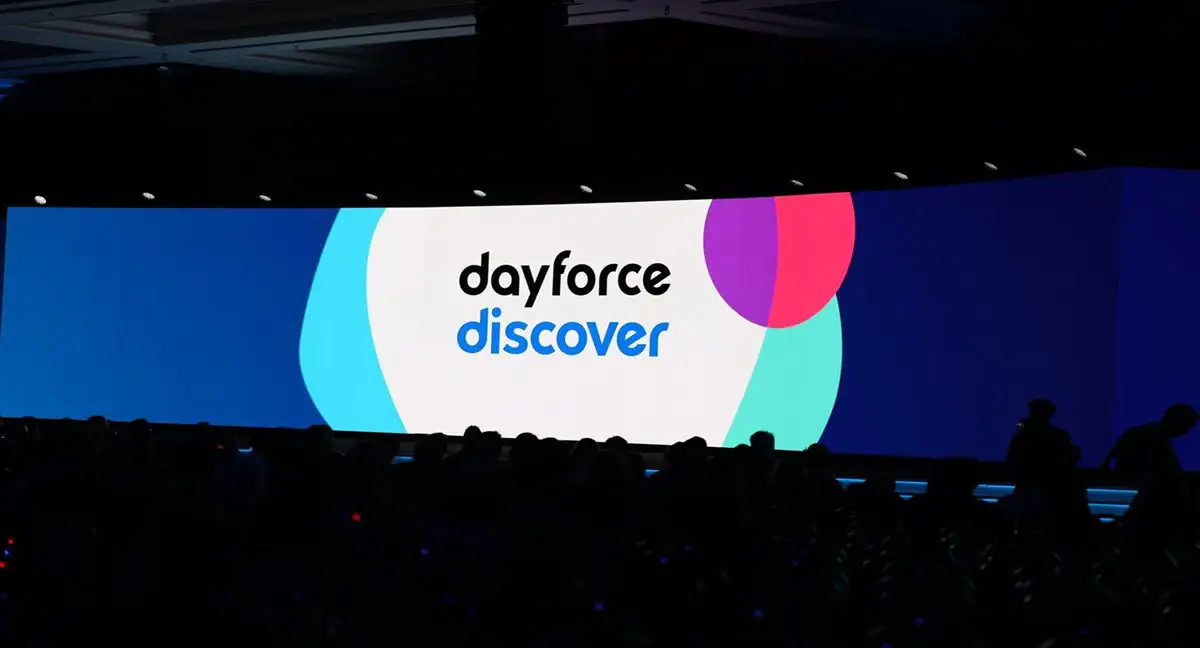
Table of Contents
How should AI change the way work gets done?
How can organizations prepare their workforce for AI and changing skills?
How can people build skills and experience as work changes?
Could strong performance be hiding workforce fragility?
How can payroll automation reduce manual work and strengthen payroll resilience?
How can workforce management make everyday operations easier?
How can organizations get more value from HR technology?
How can people analytics lead to better workforce decisions?
The conversations shaping Dayforce Discover 2026
Dayforce Discover 2026 brings together a set of questions that HR, payroll, workforce management, and technology leaders are already dealing with:
- How should AI change the way work gets done?
- How do you prepare people for roles that are changing around them?
- Where can payroll and workforce operations become simpler?
- How do you turn all the workforce data you now have into better decisions?
A process can be completely digital and still be frustrating. A manager can have more workforce data than ever and still not know what to do next. HR can see a skills shortage coming without having enough room to help people prepare for it.
AI raises a bigger question. If technology can now do more of the work, how should the work itself change?
That question connects many of the conversations around Dayforce Discover 2026.
What you'll learn
- AI is changing how work gets done. Agentic AI and AI agents can move beyond answering questions to helping carry work forward, making decisions about process design, governance, and human oversight increasingly important.
- Workforce readiness requires skills and experience. Organizations need to understand emerging skills gaps and give people opportunities to develop the capabilities they'll need as work changes.
- Efficiency and resilience need to develop together. Strong performance can sometimes hide dependencies on critical people, knowledge, and processes.
- Payroll and workforce management are connected. Scheduling, time, staffing, and pay decisions can create downstream work across the organization.
- Workforce data should lead to better decisions. People analytics and strategic workforce planning can help organizations understand where skills, capacity, and workforce risks are changing.
Dayforce Discover is Dayforce's annual customer and innovation event, bringing together leaders across HR, payroll, workforce management, technology, finance, and operations to explore AI, human capital management, workforce planning, talent, analytics and the changing world of work. The 2026 event runs from October 26 to 29 at Wynn Las Vegas.
One of the biggest questions is what happens when AI can take on more of the work people do today.
How should AI change the way work gets done?
Anyone who has worked inside a large organization has seen some version of this: A manager needs to make what sounds like a simple workforce change. The request starts with one system, needs information from another team, waits for approval and eventually creates work somewhere else in HR or payroll.Everything is digital.
And yet, two days later, someone is sending a message asking, “who is this waiting on?”
AI could help find the information that someone would otherwise have to chase, flag something that needs attention or remove a repetitive step.
As AI in HR moves from answering questions to taking on tasks, agentic AI and AI agents add another possibility. AI agents in HR and HCM can help carry work forward through defined tasks and workflows rather than simply surfacing information. That makes the processes, permissions, governance, and human oversight behind the technology even more important.
What is agentic AI in HR?
Agentic AI in HR refers to AI that can do more than generate information or respond to a request. Within defined permissions and guardrails, AI agents can use context, determine appropriate next steps, and help move work forward. In HCM, that creates opportunities to reduce repetitive HR automation while keeping human judgment and accountability where they matter.Agentic HCM extends this idea across the HCM environment, connecting people, workforce data, AI, and work. For Dayforce, this is part of the shift toward an Agentic HCM Platform designed to put AI to work across the workforce.
But it is also possible that the process has three approvals when it only needs one. Even the best technology can't fix a process that doesn't make sense.
So before deciding what AI should do, it helps to understand what is making the work life difficult today. Is someone repeatedly looking for information that should already be available? Is the same decision being made more than once? Does an exception genuinely need judgment, or has it simply always been handled that way?
Once you start looking at the work this way, the AI question becomes much more practical. You are no longer asking where AI can be inserted into the existing process. You are deciding what should disappear, what could become easier and what still needs a person.
That leaves five useful questions to work through.
5 questions to consider before automating work with AI
- What problem are we actually trying to fix? If the problem isn't clear, automating the process may simply make the wrong thing happen faster.
- Where does the work become harder than it needs to be? Look at the places where people wait, chase information, repeat work or regularly have to correct something later.
- What could technology take off people's plates? Not every step needs human attention. Repetitive work, finding information and routine checks may be better handled by technology.
- Where does a person still need to make the call? Some decisions involve context, judgment, accountability or consequences that should not simply disappear into an automated process.
- What should be better when we're done? Saving time is useful, but it isn't the only measure.
Once AI begins taking action or influencing decisions rather than simply helping someone find information, another question follows. Who is responsible for the outcome?
Who owns the decision when AI is involved?
The recommendation may come from technology. Accountability does not. Someone still has to decide when human oversight and review are required, how a decision can be explained, and what happens when the recommendation is wrong.Hiring, pay, scheduling, and performance decisions affect people directly. They require judgment about where automation makes sense and where a person needs to remain responsible. That responsibility also extends to something less obvious. If AI succeeds in taking work off people's plates, the question is whether people get to use that time for more valuable work.
What happens to the time AI gives back?
Suppose AI removes five hours of routine work from someone's week. What happens to those five hours?They could become time to solve more difficult problems, work with customers, coach employees or develop a skill the business will need next year. Or they could also simply become five more hours of work.
AI doesn’t decide between those outcomes. The organization does.
New Dayforce research looks more closely at what happens when organizations become more efficient faster than their people can adjust.
If technology changes the work, people will need time and opportunities to prepare for what comes next.
How can organizations prepare their workforce for AI and changing skills?
According to the World Economic Forum's Future of Jobs Report 2025, employers expect 39% of workers' core skills to change by 2030.The harder question is: When and where are people supposed to learn them?
An employee can have access to excellent learning content and still end the week without touching it because the calendar is full, the team is short a person and this quarter's targets aren't going anywhere. As usual, the urgent work wins.
Meanwhile, leadership wants to know whether the organization will have the skills it needs next year. Knowing which skills exist and where the skills gaps are only help if people have a realistic way to close those gaps.
How can people build skills and experience as work changes?
A course can teach someone the principles of workforce planning. Experience comes when demand changes unexpectedly, the budget is tight and none of the staffing options is ideal.The same is true in payroll. Training matters, but judgment is also built by seeing unusual situations. People need time to learn and also need opportunities to use what they learn.
AI complicates this further because some of the work it removes is work people once learned from.
A junior employee may start with straightforward cases before taking on difficult ones. Someone early in a payroll career may learn how the pieces fit together by working through them.
There is little reason to preserve repetitive work simply because previous generations had to do it. But when that work disappears, the real concern is where the next generation of experienced people will get their experience.
Not every skill can be developed in time, which leaves another practical choice.
Should you hire for new skills or develop them internally?
The answer depends on what the business needs, how quickly it needs it and which skills already exist inside the organization.Do you hire someone? Can someone already inside the company develop it? Is there a person elsewhere in the organization who already has most of what is needed?
There is no single right answer. But an organization that understands the people and skills it already has gives itself more choices.
If the business changed direction tomorrow, would leaders know who could step into the work? This is also where AI and workforce planning begin to intersect: leaders need to understand not only which roles may change, but which skills, capabilities, and workforce capacity the business will need next.
If the answer is unclear, strong performance today may be hiding a problem that has not surfaced yet.
Could strong performance be hiding workforce fragility?
A team can be performing very well and still be vulnerable. That sounds contradictory until someone important leaves.Most organizations have people everyone calls when something unusual happens. They know which exception matters, who needs to be involved and which part of the process doesn’t quite work the way the documentation says it does.
Now imagine two of those people leave within a month.
Nothing about the technology or process may have changed, yet the team suddenly feels very different because some of the experience holding it together has walked out the door.
This kind of dependency can build quietly. A few people accumulate more critical knowledge. Development gets postponed because there is always something more urgent. Teams absorb problems through extra effort.
For quite a while, everything can look fine. Until it isn't. The warning signs are often ordinary enough to explain away.
What are the signs of hidden workforce risk?
- There are people the team simply cannot afford to lose.
- Learning is always important, but never quite as important as today's work.
- Ordinary problems regularly need an experienced person to rescue them.
- Leaders do not really know where useful skills exist outside their own teams.
- Whenever technology saves time, that time immediately fills with more work.
None of these automatically means an organization is in trouble. They are worth noticing because strong teams can compensate for weaknesses for a long time. Efficiency is useful only if the organization still has the people, skills and room to respond when something changes.
Payroll makes that point especially clear. Whatever else changes across HR, finance or technology, payday still arrives.
How can payroll automation reduce manual work and strengthen payroll resilience?
Payroll teams often deal with the consequences of decisions made somewhere else. A manager changes a schedule. Someone's employment status changes. An approval arrives late. Each event may begin elsewhere, but any of them can reach payroll and become urgent.Automation can help, but only if it removes the right work. The bigger opportunity is to reduce the manual dependencies that make payroll harder to manage, such as calculations, checks, approvals, and recurring administration. Dayforce explores the importance of the function in why payroll should be treated as critical infrastructure.
What is payroll automation?
Payroll automation uses technology to reduce repetitive payroll work such as calculations, checks, approvals, and recurring administration.But the work being automated is worth examining too.
Consider the reconciliation the payroll team completes every cycle because two pieces of information regularly do not line up. Automating reconciliation may save time. Understanding why the information keeps becoming inconsistent may save much more.
Automating a workaround is still a workaround. And in payroll, the reason for that workaround often sits somewhere upstream.
What can payroll data reveal about the wider workforce?
A sustained rise in overtime might point to staffing pressure. Repeated time corrections might point to a scheduling problem or an issue with how managers are handling time.The numbers behind pay can sometimes tell the business where to look next. A schedule changes. That affects time. Time eventually affects pay.
Some of the most common problems payroll sees begin earlier, when everyday staffing and scheduling decisions are made.
How can workforce management make everyday operations easier?
Workforce management can make everyday operations easier by connecting scheduling, time, labor, and pay so routine workforce changes create less manual work downstream.A store manager has two people call in sick before the afternoon shift. They aren't thinking about workforce management. They need to know who can work, what it will cost, and how quickly they can arrange coverage.
The effects don't end with the schedule. What happens now can show up later in time records, labor costs and pay.
How are scheduling, time, and pay connected?
A decision that takes a manager 30 seconds can travel through several parts of the organization. When scheduling, time and pay do not connect well, the manager may feel the problem first, but the extra work can surface somewhere else days later.The goal is not simply to process each step faster. It is to stop an ordinary workforce change from becoming more work than it needs to be.
These decisions are becoming more complicated for another reason. The person doing the work is not always a traditional full-time employee.
How is the workforce changing?
Organizations may use full-time employees, part-time employees, contractors, and contingent workers. AI and AI agents can take on some defined work as well.. That changes the planning question. Instead of asking only how many people are needed, leaders also need to understand what work needs to happen, which skills it requires, and the best way to get it done.The answer may require new technology, but not always. The organization may already own what it needs, or it may need more flexibility from the technology already in place. What if that technology could adapt more easily as the business changes? That is one of the questions behind the innovation story at Dayforce Discover 2026.
This connection between everyday workforce decisions and execution is one reason workforce management has become such an important technology category. Gartner's inaugural 2026 Magic Quadrant for Workforce Management Technology named Dayforce a Leader, with Dayforce positioned highest overall for Ability to Execute.
How can organizations get more value from HR technology?
There is a familiar moment in many technology conversations when someone says, “We need a new tool.”Adding another application can solve an immediate problem. It can also mean another login, another integration, another source of data, and another thing to support.
Before adding another tool, five questions can help separate a technology gap from a process problem.
Do you really need another HR tool?
- What problem are people actually having?
- Can something we already have solve it?
- If it can, why isn't it working today?
- What extra work will another tool create?
- Who will own it once the implementation team leaves?
Whatever technology an organization uses, its value ultimately depends on whether it helps people make better decisions.
How can people analytics lead to better workforce decisions?
Imagine walking into a leadership meeting in 20 minutes knowing turnover in a critical part of the business is rising. The dashboard can tell you how much it has risen. It may show which teams are affected and where the pattern is strongest.Then comes the question the dashboard cannot answer on its own.
What should we do?
Is workload driving people out? Is there a manager problem, a lack of career opportunity, or a compensation issue? Is the organization losing skills it will struggle to replace?
The value of People analytics is helping someone move from “something is happening” to “here is the decision we need to make.”
What is people analytics?
People analytics uses workforce data to help organizations understand what is happening with their people and make better decisions.The useful place to begin is not “What report can we build?”
It is “What are we trying to decide?”
What do we need to know? Do we have the information? Can the person making the decision understand it?
What happened after we acted?
Information becomes valuable when it changes what the organization does, which is also where People analytics starts to connect with workforce planning.
How can workforce data improve workforce planning?
Headcount and cost matter. Suppose the business wants to enter a new market next year. Does it have the people and skills to do it?Which skills already exist? Where are they? Who needs to be hired? That is when workforce data becomes useful.
Strategic workforce planning connects those questions to where the business is going: what work will change, which capabilities will matter, where skills gaps may emerge, and how workforce capacity needs to evolve.
The conversations shaping Dayforce Discover 2026
Several Dayforce Discover 2026 perspectives explore these questions in more detail. The HR outcome guide looks at workforce strategy, talent and skills. The payroll outcome guide focuses on payroll priorities, while the HR technology outcome guide looks at getting more value from HR technology.Chris Armstrong, Chief Customer Officer at Dayforce, looks at the value of learning from peers in his perspective on the Dayforce Discover community. Comparing notes with someone who's dealt with a similar problem can reveal options that aren't obvious when you're working through it on your own.
There is also a broader collection of Discover 2026 content for readers interested in the event itself, including the Discover quiz, perspectives for Builders, Explorers, Visionaries and Connectors, a guide to making the business case for Discover, and a look at the event’s sustainability and community impact.
You may also like:
Ready to get started!