How can leaders turn AI efficiency into lasting business value?
Five insights from the Executive Forum at Dayforce Discover 2026 on redesigning work, evaluating AI investments, and protecting workforce capability.

Table of Contents
AI can make individual tasks faster. But turning those gains into lasting business value requires leaders to decide how work should change and where the saved capacity should go.
At the recent Executive Forum during Dayforce Discover, leaders from HR, finance, technology, and operations explored the decisions behind that transition.
Key takeaways: Five decisions shaping AI’s business value
- Bring leaders together earlier. Involve HR, finance, technology, operations, and risk before selecting AI initiatives, and establish who’s accountable for the outcomes.
- Redesign complete workflows. Examine handoffs, approvals, and decision-making so faster tasks translate into better results across the process.
- Agree on how to evaluate AI investments. Set measures for business and workforce outcomes, account for the full cost, and identify the trade-offs leaders are prepared to accept.
- Decide where AI-created capacity goes. Make explicit choices about reinvesting saved time in work quality, manageable workloads, and skills development.
- Build the conditions for trusted adoption. Give employees approved tools, practical support, and clear rules for data use, human review, and raising concerns.
Turning AI productivity into business value: Five questions for leaders
The Executive Forum discussions surfaced five questions that leadership teams need to answer together. Each addresses a decision that shapes whether AI’s efficiency gains translate into stronger business performance and a workforce equipped to sustain it.
1. Who should be involved in AI decisions, and when?
Most organizations are still structured around a familiar division of responsibility: people questions belong with HR, technology decisions with IT, financial decisions with finance, and operating questions with the business. That model works when decisions stay within those boundaries, but AI almost never does.
As Dayforce CFO Jeremy Johnson noted from the Executive Forum stage, what begins as a technology decision quickly becomes a workforce decision with financial and operational implications. A new AI capability can change the skills a team needs, the work employees are expected to do, the data leaders can trust, the controls required to manage risk, and the business case used to justify investment.
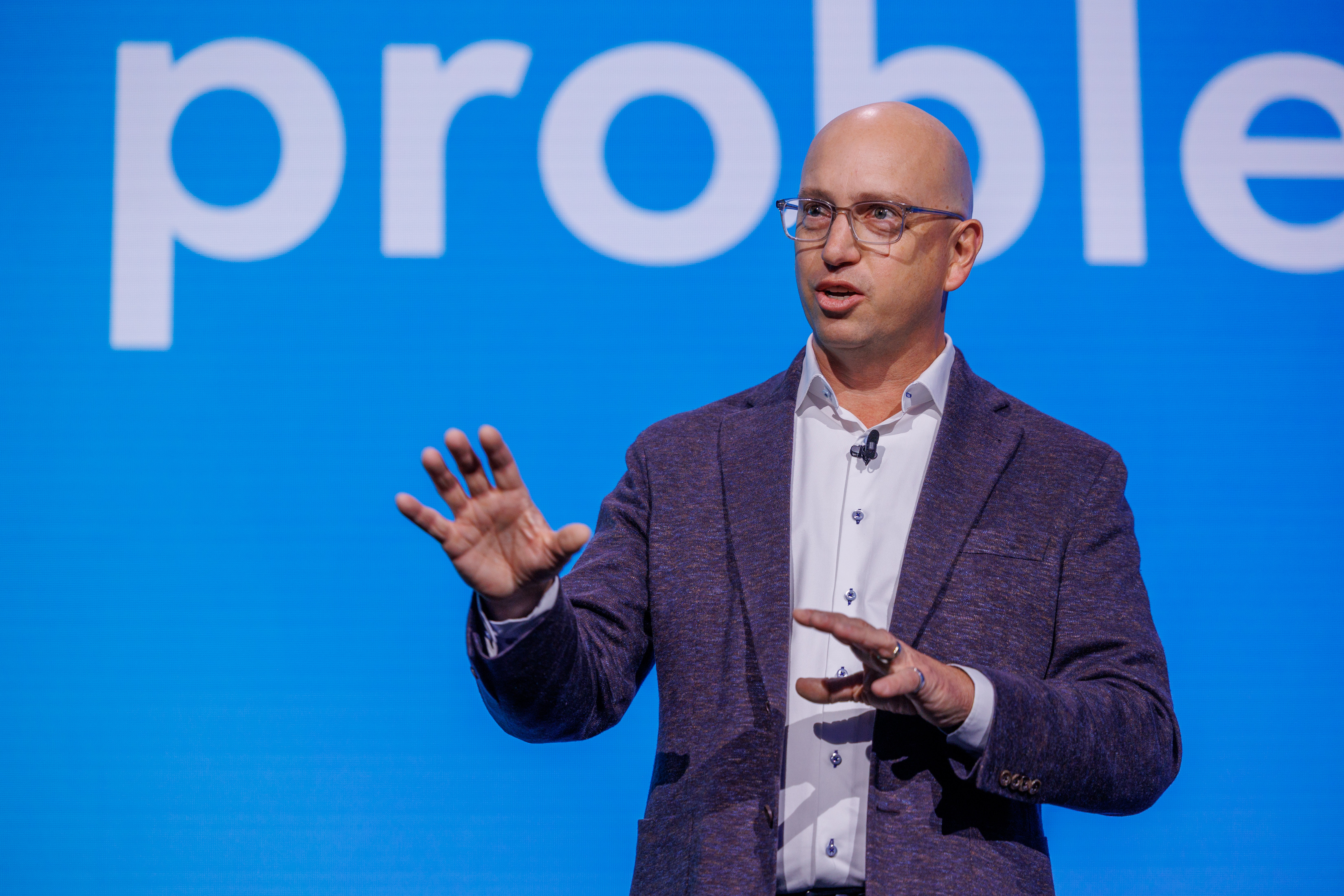
Johnson emphasized that these functions need to shape AI initiatives before a pilot is selected or a business case is written. Bringing them in later leaves the organization reacting to decisions already in motion. Together, leaders should assess what the use case changes across the business and establish who’s accountable for the outcome.
2. How should organizations redesign workflows around AI?
AI can make individual tasks faster, but isolated productivity gains rarely add up to a transformed business. They often leave the surrounding workflow, decision rights, data dependencies, and approval chains untouched, either creating new bottlenecks or, more often, exacerbating existing ones.
Google Chief Strategist Neil Hoyne illustrated this challenge through the early adoption of electricity in factories. When the transition initially occurred, many manufacturers replaced steam engines with electric motors, but kept the same factory layouts and ways of working. The new technology produced only marginal efficiency gains because the operating model had been built for the old one. The larger gains came later, when organizations redesigned the factory around what electricity had made possible.
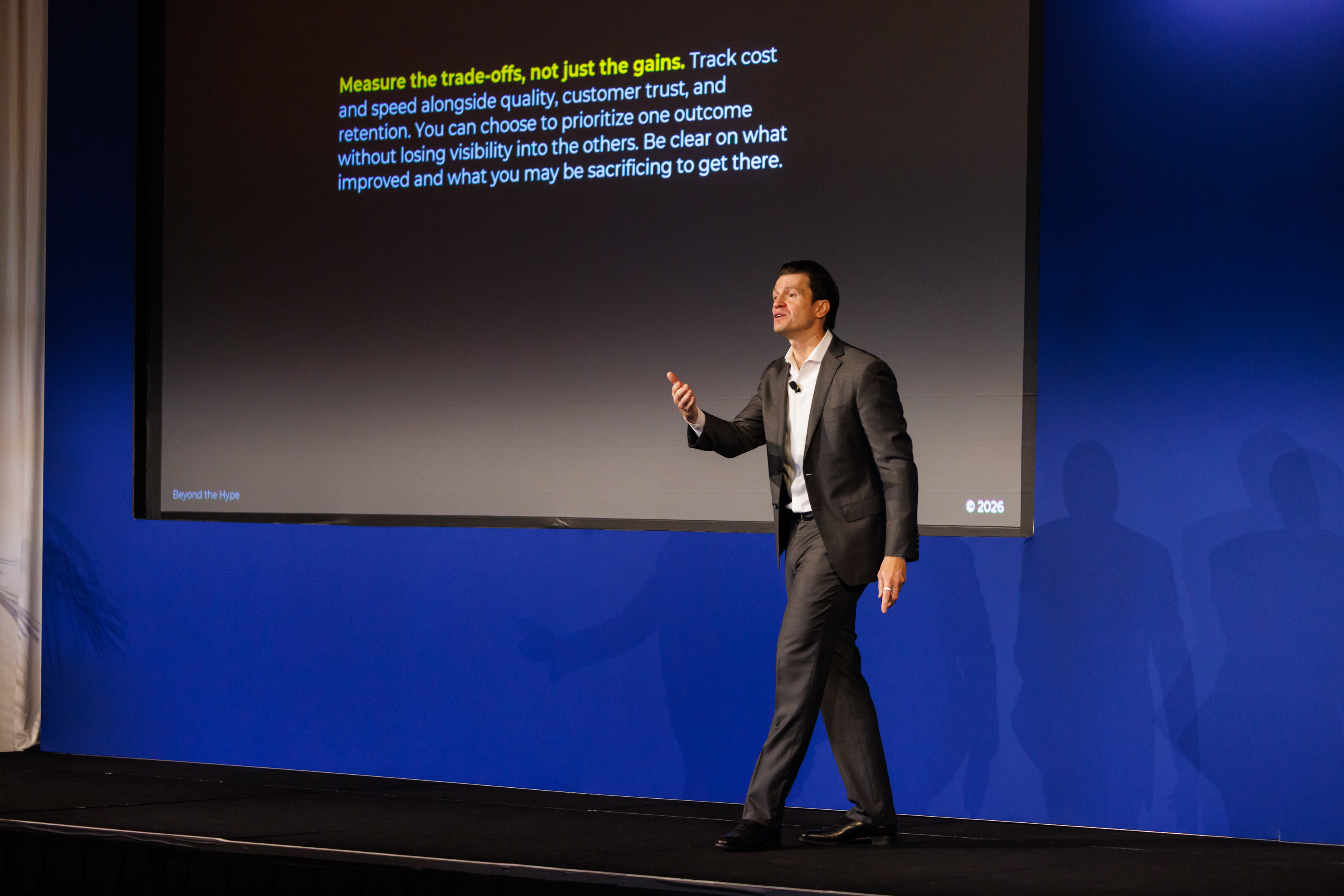
To redesign a workflow around AI, leaders should examine how work moves from the initial request to the final outcome. Where do handoffs stall? Which decisions require human judgment? Does faster task completion reduce the overall turnaround time, or simply move the queue elsewhere? Who is accountable for the result? These questions help leaders identify which steps to automate, which controls to retain, and which parts of the process need to change before AI can deliver meaningful value.
Redesigning work also requires preparing the people who will perform it. The latest Dayforce Pulse of Talent research suggests that workforce preparation is lagging behind AI adoption.1
Nearly two-thirds of respondents say AI adoption is moving faster than workforce preparation, while 64% say organizations are pursuing AI-driven efficiency without fully considering its long-term workforce effects.
Download the Pulse of Talent
When organizations focus narrowly on task-level efficiency, they risk accelerating work without building the skills, experience, and workforce depth needed to sustain performance as work changes.
3. How should leaders evaluate AI investments and trade-offs?
Leaders need evidence that an AI initiative can reduce costs, improve productivity, or create a better experience. They also need agreement on which trade-offs they’re prepared to accept to achieve those outcomes. Data can inform that judgment, but it can’t make the decision for them.
Hoyne illustrated the problem through Blockbuster. In his telling, leadership understood the threat from streaming, but responding would’ve meant surrendering significant near-term revenue. The obstacle was reaching agreement on that trade-off.
The lesson is relevant to AI. A business may see evidence that a new way of working could create value, while still facing intensely difficult tradeoffstrade-offs about where to invest, what to stop doing, how to manage risk, or whether to accept short-term disruption in pursuit of a longer-term advantage.
To evaluate an AI initiative, leaders should establish a baseline for the workflow it will change and agree on what would justify expanding, revising, or stopping the investment. Measure outcomes such as cost per completed transaction, turnaround time, error rates, or customer satisfaction. Include the full cost of implementation, integration, training, and ongoing human review.
Workforce measures should sit alongside those business results. Is workload becoming more manageable? Are employees using saved time to build skills? Can the team still exercise sound judgment when AI produces an incorrect answer?
Agreeing on these measures before a pilot begins gives leadership teams a basis for deciding whether AI is creating lasting value and which trade-offs they’re prepared to accept.
4. How should organizations use the capacity AI frees up?
Dayforce Chief People Officer Amy Cappellanti-Wolf challenged the assumption that organizations can encourage employees to build AI skills while promising that those new skills will never change what’s expected of them. As AI makes people more capable, expectations will inevitably change. But leaders can’t expect sustained, open adoption if every efficiency gain is treated as a reason to assign more work.
Dayforce’s 17th Annual Pulse of Talent puts numbers behind that tension. When asked what organizations should do with time saved by AI, 64% of workers said reduce burnout and workload, 51% said improve work quality, and 50% said invest more time in learning and development.
Yet workers expect a different outcome. Forty percent believe their employer will give them more work, and 39% expect AI-driven efficiency to result in reduced headcount or slower hiring. When employees believe AI will only intensify their workload or threaten their roles, they have an incentive to resist the technology, downplay its value, or use ungoverned tools outside the organization’s controls.
The stakes extend beyond employee sentiment. Half of workers are expected to build new skills while maintaining the same workload, yet only 27% say they have enough time at work to do so.
AI can also remove tasks through which employees once built expertise. Without deliberately replacing that developmental value, organizations can create what the Pulse report calls experience debt: a future capability cost that builds as expertise, judgment, and succession depth erode.
Leaders need to make a clearer bargain. They should be explicit about where capacity will be reinvested, whether that means higher-value work, learning new skills, improving customer or employee experiences, or taking on more responsibility. That reinvestment should include opportunities to develop the judgment employees need to evaluate AI outputs.
5. How can organizations build employee trust in AI?
AI can create value only when people are willing to use it in meaningful parts of their work. That makes trust a practical operating requirement, not a communications exercise.
Nick Thompson, CEO of The Atlantic, offered a useful warning from the Executive Forum stage: senior leaders can become enthusiastic about AI long before the rest of the organization is ready to follow. At his organization, broad adoption didn’t come from executive encouragement alone. It came from internal working groups and employee champions who could show colleagues specific ways AI could help them in their own roles.
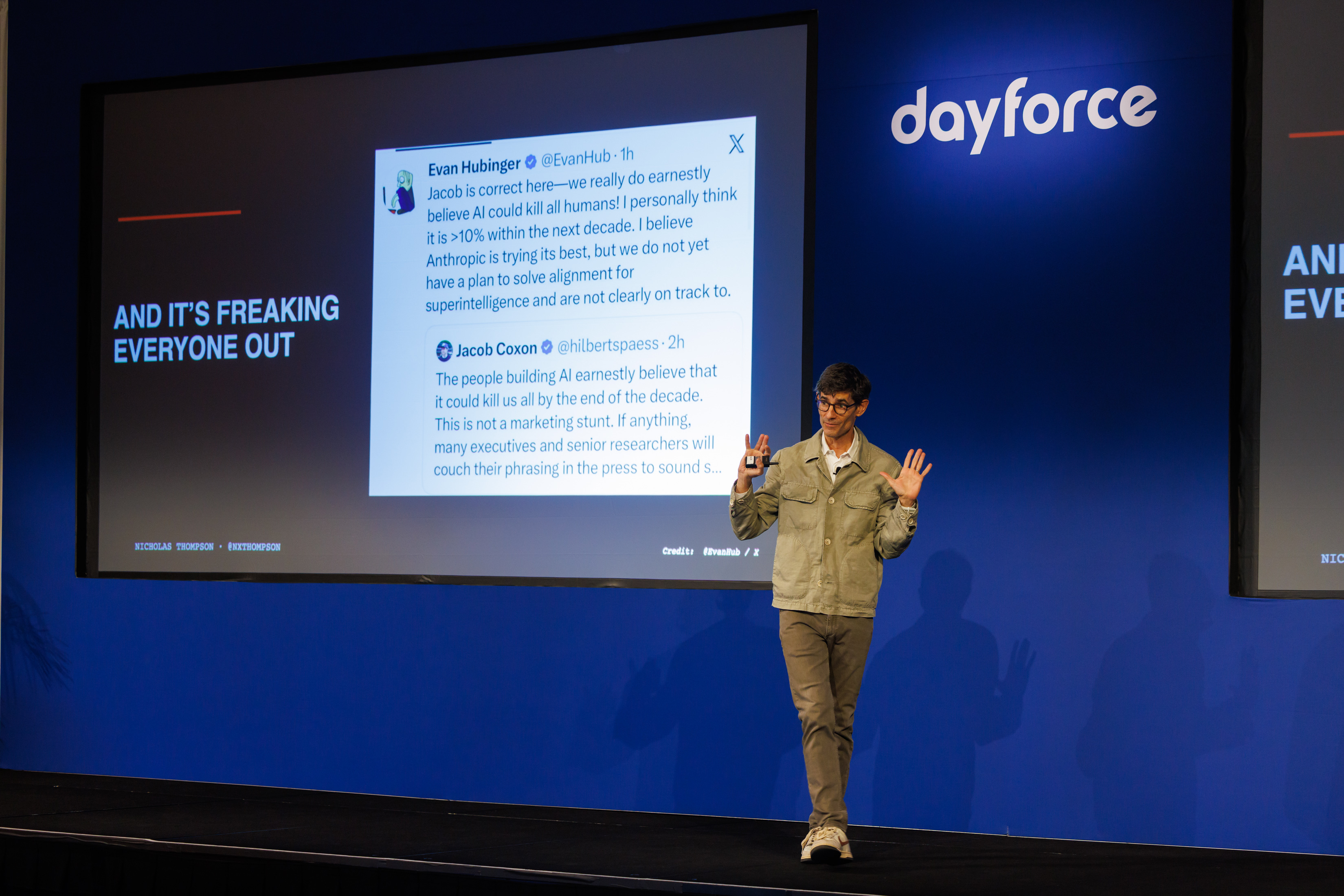
Organizations can build on that peer support by giving employees opportunities to test approved AI tools safely. Employees need clear guidance on what data they can use, which outputs require human review, and how to report errors or raise concerns. They also need to understand who is accountable when an AI-assisted decision goes wrong.
How can workforce planning connect productivity, cost, capacity, and skills?
Workforce planning helps leaders translate AI productivity gains into decisions about staffing, development, and deployment. By assessing workload, labor costs, available capacity, and skills together, organizations can identify where saved time could relieve pressure, support learning, or meet new business needs. That gives leaders a basis for deciding where efficiency gains should be reinvested and whether those choices are strengthening future capability.
Dayforce’s 17th Annual Pulse of Talent offers a framework for putting those decisions into practice:
-
Match: Identify where capability, capacity, and knowledge are concentrated before disruption exposes the risk.
-
Make: Build skills, experience, and workforce depth before gaps become urgent, including by reinvesting some AI-enabled capacity in development.
-
Mobilize: Make skills and opportunities visible so people can move into the work the business needs next.
Explore the Dayforce 17th Annual Pulse of Talent for worker, manager, and executive perspectives on AI productivity, workload, and skills development, plus a framework for strengthening workforce resilience as work changes.
Get your complimentary report
References
1. Fast Now, Fragile Later: The 17th Annual Pulse of Talent. Dayforce. October 2026.
You may also like:
Ready to get started?