Plan Together. Adapt Faster.

Keep your workforce plans, skills, and labour costs aligned with business goals.

Plan with real-time workforce and cost data so you can respond faster with Dayforce Strategic Workforce Planning.

Overview

Help take the guesswork out of workforce planning

When workforce and financial data sit in spreadsheets, leaders can miss the full picture, and small gaps in staffing or budget can quickly become costly. Dayforce Strategic Workforce Planning helps leaders model workforce changes with greater visibility into the cost and compliance impact of different scenarios so you can forecast costs, move fast when things change, and lead with confidence.

Turn manual planning cycles into faster, more informed decisions

With real-time dashboards and insights in one clear view, leaders can make the right moves for the
Task planning board with clock icon
Plan smarter, act faster

Make it quick and easy for teams to model changes, forecast skills and costs, and run “what-if” scenarios, turning insights into clear, confident plans that drive results.

Keep leaders aligned and accountable

Give HR, finance, and business leaders a shared view of workforce plans so decisions stay aligned to business goals and budget.

What's included

Smarter organisational design. Faster decisions. Stronger alignment.

Replace complicated, manually managed spreadsheets with a clearer view of workforce structure, skills, capacity, and labour costs. Dayforce Strategic Workforce Planning helps HR, finance, and operations leaders make more informed decisions as business needs change.
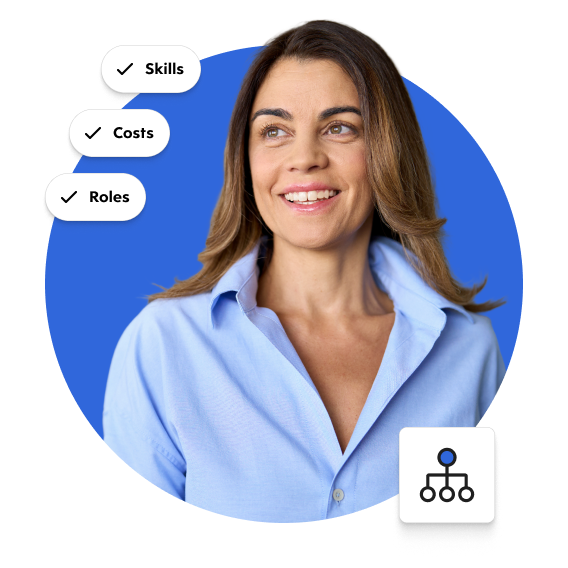
Scenario planning

Model workforce changes and assess different organisation structures as business needs change before you commit, including the potential impact on labour costs, awards, enterprise agreements, and other employment conditions. 

Scenario recommendations

Refine workforce plans, assess cost implications, and keep proposed changes aligned with business goals.

Stakeholder alignment

Share clear workforce plans with HR, finance, and operations using presentation-ready templates that support faster decisions and stronger stakeholder alignment.

Strategic insights

Identify changing spans of control, workforce cost pressures, and opportunities to improve organisational design and capacity planning.

Simplified employee data management

Keep workforce data up to date in a single source of truth, so employee records, organisational structures, and workforce plans stay aligned.

Issue resolution

Identify potential issues early, such as inconsistent spans of control, duplicated roles, or workforce costs outside budget, so leaders can assess the right next steps.

Ready to get started?

See the Dayforce Privacy Policy for more details.
This site is protected by reCAPTCHA and the Google Privacy Policy and Terms of Service apply.

Frequently Asked Questions

Want to know more about Strategic Workforce Planning?

What is strategic workforce planning?

Strategic workforce planning helps you to match people, skills and budgets to your goals so your business can adapt and grow.

When it’s done right, strategic workforce planning helps give your people the support they need to succeed, no matter what challenges come their way.

What business situations require workforce planning software?

Strategic workforce planning can be especially valuable in these five scenarios:

  1. Workforce restructuring
  2. Reshaping your organisation for long-term health and stability
  3. Understanding how AI, people, and agents work best together
  4. Mergers, acquisitions, or divestitures
  5. Executing a growth plan

How important is data in strategic workforce planning?

Data is the foundation of effective organisational design, workforce planning, M&A and strategic decision-making. Leaders often struggle with fragmented data across systems, especially when they need a reliable single view to plan with confidence. That made it hard for HR, Finance and Operations leaders to collaborate. Planning slowed down because teams had to spend time cleaning, combining and validating data. Having workforce and financial data together allows for more accurate scenario planning. Details like skills, locations, tasks, time, development plans, salaries, benefits and overhead give leaders a clear picture of workforce costs.

What is continuous planning and how is it informed by analytics?

Continuous planning means adapting as business conditions change – not just once a year. Successful organisations stay agile, updating and optimising their plans whenever there’s a major shift. Predictive analytics send alerts when workforce or market conditions start to shift, so leaders know when it’s time to act.

What is the connection between scenario planning and financial forecasting?

What-if scenarios – such as adding or removing roles – can quickly turn into detailed financial forecasts. Dashboards bring scenarios to life, while role-based access allows teams to collaborate securely. Leaders can export plans with ready-to-use templates, making it easier to move quickly on decisions and stay aligned on the financial impact.

How does Strategic Workforce Planning support compliance?

By giving HR, finance, and business leaders a shared view of workforce, cost and structure data, Dayforce helps teams assess the compliance and labour cost implications of planning decisions earlier in the process.

Empowerment through knowledge and expertise