When payroll and workforce management meet extreme frontline complexity
When pay and WFM are pushed to the limit, what happens underneath?


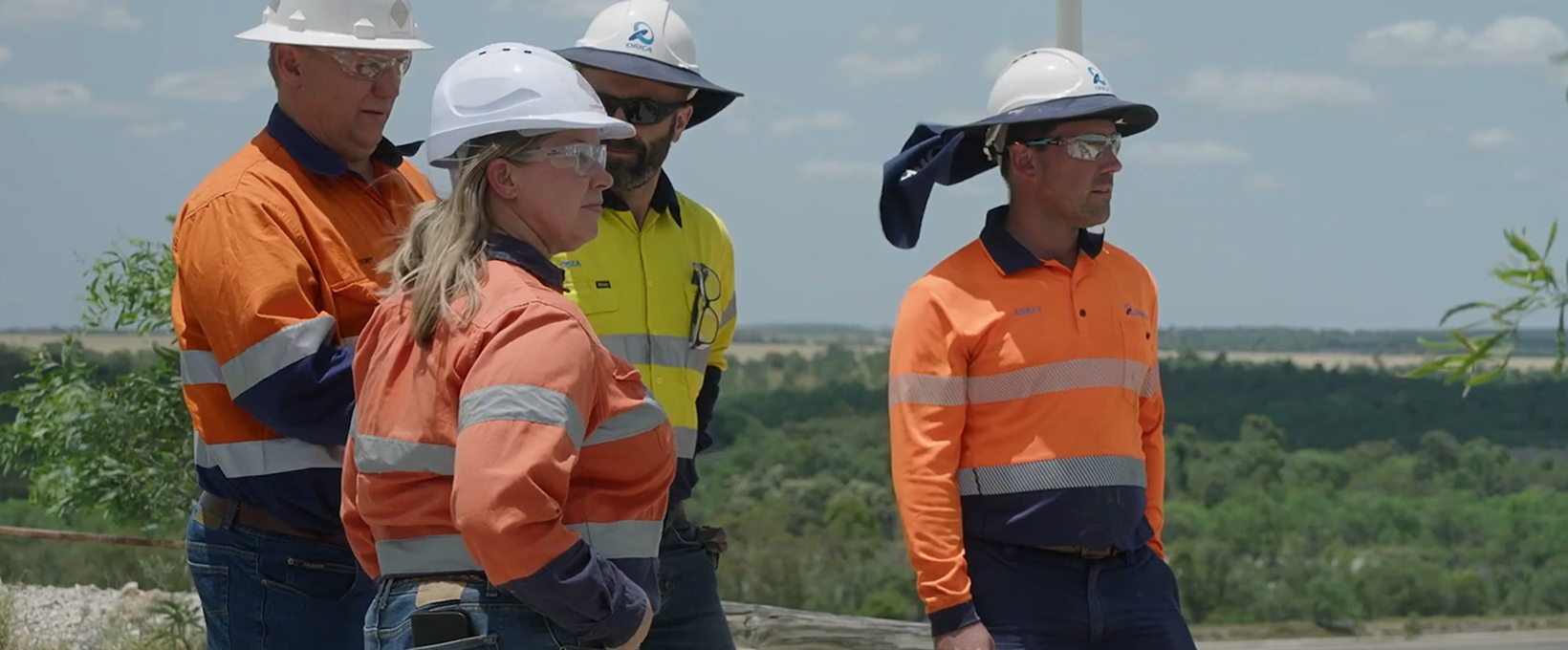
Table of Contents
Table of Contents
A multi-site fresh food retailer managing complex rosters, Award rules, and daily labour costs.
A tourism company onboarding 1,700+ seasonal workers across 17 legal entities every year.
A commercial explosives company employs people across 48 countries.
These sound extraordinary, but for complex frontline organisations they’re just another day at work. Underneath that complexity is a constant stream of roster changes, location shifts, allowances, and compliance obligations that flow through to pay and labour costs.
A roster changes. Someone works overtime. An employee clocks in at a different location. A shift triggers a premium. An absence changes the hours worked. Many of these events are captured in workforce management (WFM), but their impact also needs to be reflected in payroll.
Most HCM evaluations stop at asking whether payroll and WFM are integrated. The next question is often, 'How quickly does that information stay in step?'
But for organisations managing complex workforces, the more revealing question is:
How many handoffs happen inside your HCM stack between a workforce event such as a roster change and its payroll impact?
A “unified” suite isn’t necessarily a single architecture
For years, large organisations have been consolidating HR technology onto enterprise HCM suites. There are good reasons for that. Fewer vendors and applications can simplify administration, procurement, support, and the employee experience.
But consolidation alone doesn’t answer what happens underneath that experience.
Vendors may describe payroll and WFM as “integrated” or “unified.” Some may even point to a common data model across their suite. But those terms don't answer a more fundamental question: when something changes in the workforce, how does that change actually make its way into payroll?
If that change has to move between systems, processing environments, or data states, there’s still a handoff to manage. Making that handoff faster can reduce the delay, but it doesn’t eliminate the dependency.
That’s why the more revealing measure isn’t how quickly payroll and WFM synchronise. It’s whether they have to synchronise at all.
Think about two clocks in the same kitchen: one on the microwave and one on the oven. You can set them to the same time. You can resynchronise them whenever they drift. But they remain two independently maintained clocks.
The same question applies to HCM architecture: Do payroll and WFM operate from the same continuously maintained workforce data, or do independently maintained states have to be synchronised?
That might sound a bit technical at first, but the impact of that distinction becomes a lot easier to see when your workforce gets complicated.
When every roster decision has a pay impact
Consider Harris Farm Markets.
Operating a large, shift-based retail workforce means workforce decisions can quickly become payroll decisions. A change to hours worked, a roster adjustment, or the application of Award rules can all affect what an employee is paid and what that labour ultimately costs the business.
Harris Farm Markets has been managing time, attendance, and payroll through separate systems that didn’t integrate well, leading to manual adjustments, data inconsistencies, and additional compliance complexity.

With Dayforce, Harris Farm Markets brought payroll and workforce management together in one system, creating a single source of truth for workforce data, helping reduce the need for manual reconciliation between time and pay.
Leaders also gained access to daily workforce and wage data, helping them have better visibility into labour costs and adjust rosters as operational needs change.
This gets to the heart of the architecture question. If workforce management knows when someone worked, what they worked, and the conditions attached to that work, does payroll operate from those same workforce facts? Or does that information first have to move to, and be processed by, another environment?
Synchronisation can make that second model faster. But a single architecture can reduce the need for that handoff between native payroll and WFM systems in the first place.
When pay and time have to keep pace with 17 legal entities
Trojan Holdings presents another kind of extreme workforce complexity.
The privately owned company operates across tourism, transport, and property-related industries, managing businesses from ski fields and hotels to transport operations and rural services. With 17 legal entities, Trojan Holdings employs 2,300 people, with 1,700 of those employees seasonal workers who join the business annually.

Before Dayforce, Trojan relied on mostly manual processes, with a lot of paper, photocopying, scanning, emails, and shared network drives. This meant a new employee’s details might be entered into different systems up to eight times. Each entry was an opportunity for error and delay in getting someone ready to work.
When Trojan Holdings implemented the full Dayforce platform, the employee data went from multiple sources into one database. With a large seasonal workforce where many employees come back year after year, their employment history remains accessible in Dayforce, helping them maintain continuity while simplifying rehire processes.
"Dayforce has enabled us to take something that is quite complex and make it quite simple."
What once was a complex combination of documents, emails, and manual steps is now fully digital. Trojan Holdings now recruits, onboards, and manages its entire seasonal workforce without printing a single page, and a new hire can have full system access within 15 minutes of being hired. For managers, the change has been equally meaningful, freeing them from the administrative burden of processing paperwork and chasing signatures so they can focus on leading their teams.
The architectural test here is simple: When employing a seasonal workforce, how many system boundaries or data transfers stand between that event and its payroll impact?
When payroll complexity spans 48 countries
Then there's Orica.
The mining and infrastructure solutions company has more than 14K employees operating across 48 countries and five geographies. Its workforce includes salaried and non-salaried employees, unionized and non-unionized workers, representing roughly 90 cultural backgrounds.

At one point, Orica was managing that complexity through 34 separate payroll systems.
Payroll in an environment like that involves a lot more than calculating earnings. Different workforce populations, local requirements, time and attendance, allowances, compliance requirements, and regional processes can all factor into payroll processes.
Orica began consolidating those payroll environments onto the Dayforce platform alongside Time & Attendance, with the aim of standardising payroll operations and helping improve its ability to manage compliance requirements across regions.
“What we’re really looking to do is know that we’re accurately paying our people – every time we pay them.”
— Stacey Brewer, Vice President, Global Process Strategy and Enablement, Orica
Orica reports that consolidating payroll onto the Dayforce platform has helped standardise payroll operations across regions, reduce the burden of fragmented processes, and give its team more capacity to focus on reporting, anomaly detection, governance, and compliance.
Orica’s story shows why consolidation matters. It also shows why the architecture you consolidate onto matters more. At Orica’s scale, consolidating onto a single architecture can reduce the number of places where workforce and payroll information need to be kept aligned.
Extraordinary cases expose an everyday problem
Most employees will never have to move from Sydney to The Hague. Most organisations aren’t supporting thousands of seasonal employees every year or running payroll across dozens of countries.
But the underlying challenge isn’t unusual. As workforce complexity grows, so do the opportunities for what happens at work and what payroll reflects to fall out of step.
So the next time you evaluate payroll and WFM, don't stop at whether they're integrated. Ask what the architecture actually requires when something changes.
5 HCM architecture questions to ask any payroll and WFM vendor
- When you say payroll and WFM share one data model, what does that mean for how the two actually process a workforce change?
- When time, rosters, location, awards, or absences change, what has to happen before payroll can reflect that change?
- Does anything have to be transferred, synchronised, or reconciled between your native payroll and WFM systems?
- If payroll and WFM maintain information separately, what keeps them aligned when something changes?
- Can payroll continuously calculate audit-ready net pay using current workforce data throughout the pay cycle, or does calculation depend on another handoff or process?
And if the answer involves synchronisation, ask one more question:
Why does the data need to be synchronised in the first place?
A fast handoff can reduce latency. It doesn’t eliminate the handoff.
The next time an HCM vendor describes payroll and WFM as “unified,” ask whether the architecture underneath is actually single. For organisations managing complex workforces, that distinction matters more than the label.
Want to see what a single payroll and WFM architecture looks like in practice?
Let’s see it
References
1. Dayforce, “Orica sets off global payroll transformation,” Dayforce customer story.
2. Dayforce, “Trojan Holdings streamlines onboarding for 1,700 seasonal workers,” Dayforce customer story.
3. Dayforce, “Harris Farm markets harvests a fresh take on operational efficiency with cloud HCM software,” Dayforce customer story.
You may also like:
Ready to get started?